Balance and Weight
A
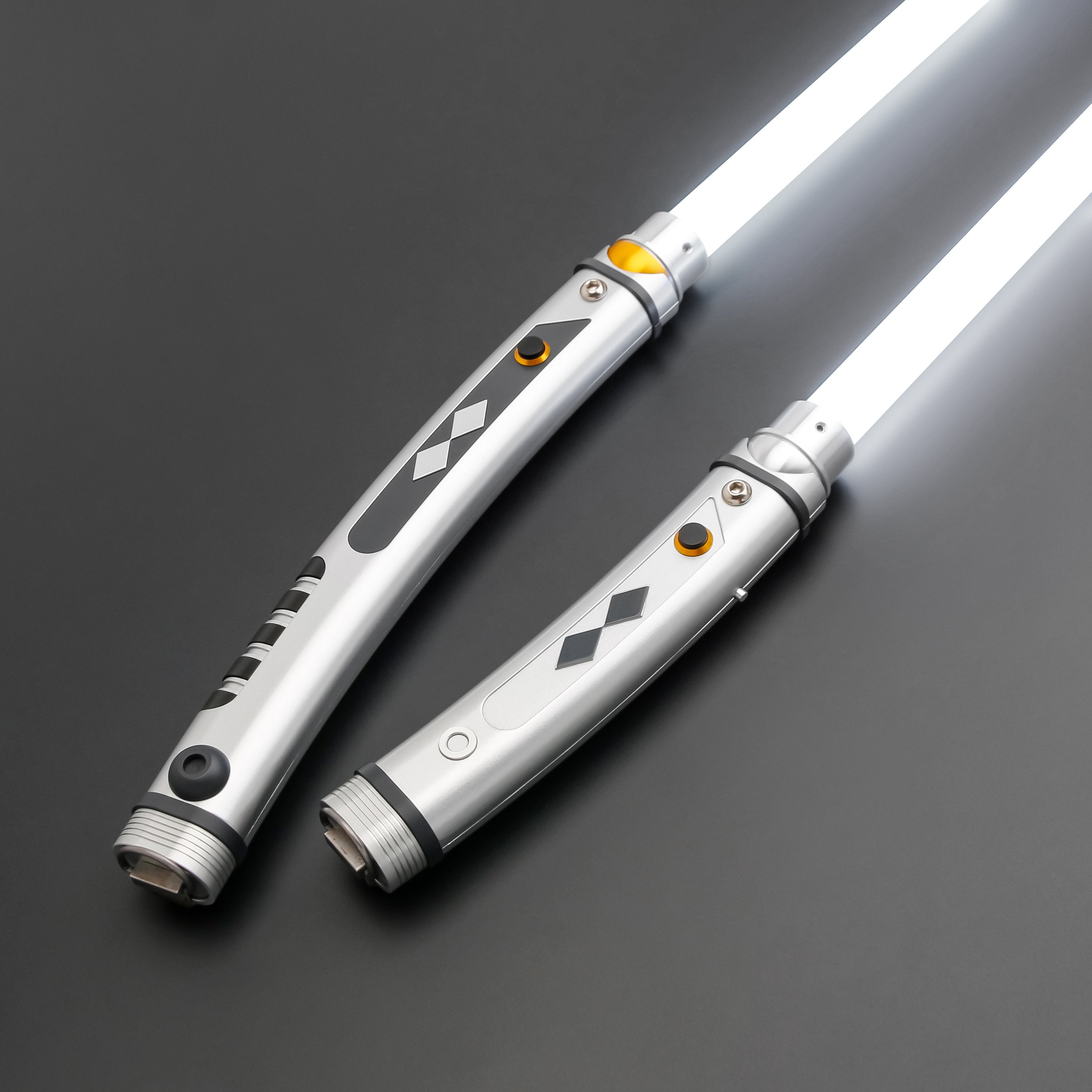
single blade lightsaber concentrates its weight close to your hand. The hilt sits in your grip, the blade extends forward, and the balance point stays predictable no matter how you move it.
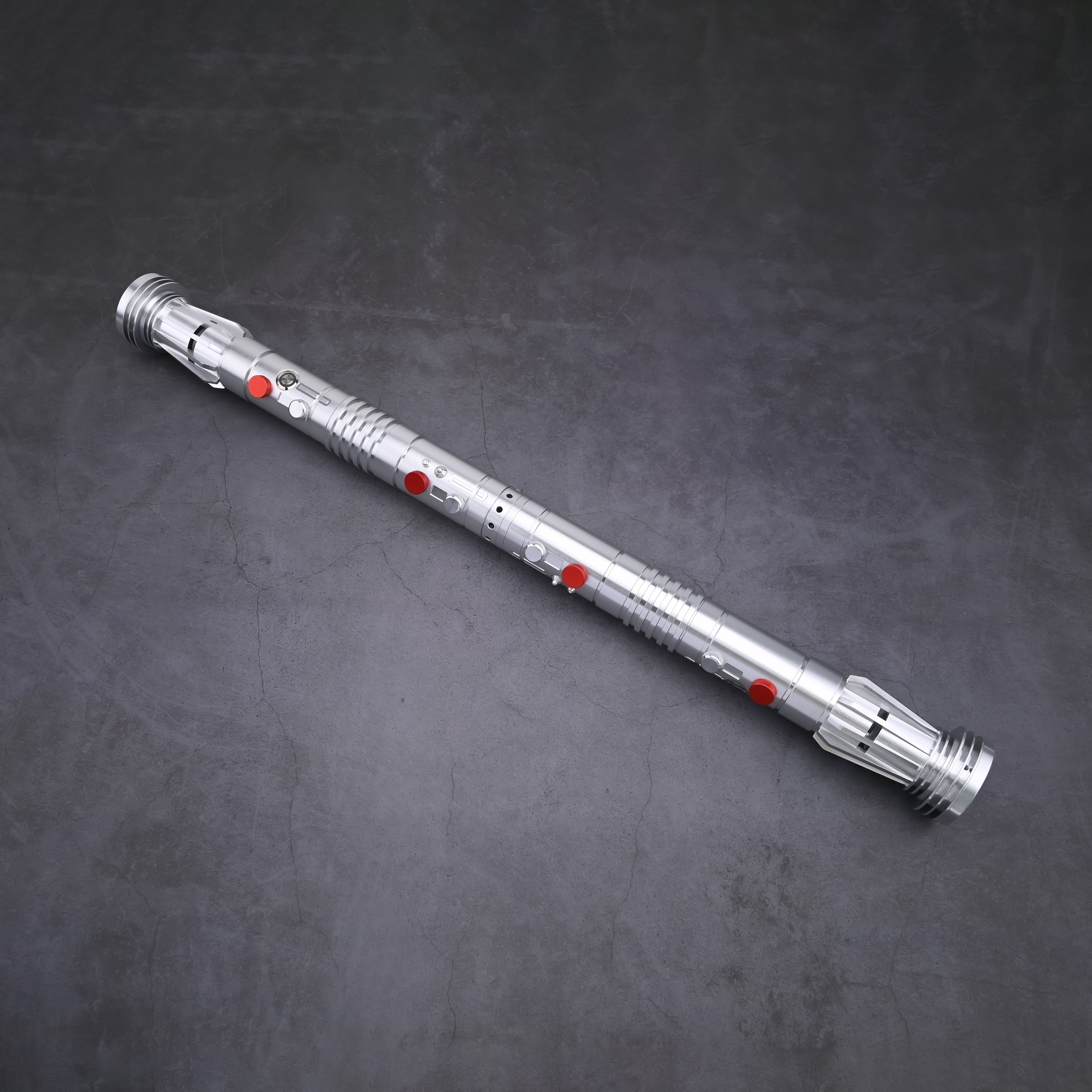
A double bladed saber shifts weight toward both ends, the same way a bo staff carries more weight at its tips than a shorter stick does. The hilt itself is longer to fit two emitters, and that extra length changes how the weight sits in your hands. It isn't heavier overall by much, but it feels heavier in motion, especially during longer sessions where your forearms and shoulders do more work managing that end weight through spins and transitions.
Motion: Thrusts vs Flow
A single blade rewards linear movement. Thrusts, slashes, and quick direction changes all concentrate your arm's force into one tip, which is why single blade fighters can land a fast, forceful strike with a small motion.
A double bladed saber rewards flow. Spins, wide arcs, and continuous rotation are where it performs best, since the length and end weight that make quick jabs harder also make circular motion feel natural once you build the muscle memory. Force gets distributed across the arc rather than concentrated in one strike, so single decisive hits feel less sharp, but sustained defensive motion feels more natural.
Spatial Awareness: One Blade vs Two
With a single blade, you track one striking end and whatever is in front of you. That's the full picture.
With a double bladed saber, both ends are live at once, which means you're managing space behind and beside you just as much as in front. Experienced double bladed duelists describe it as a simple rule: if you can feel the second blade near your body, it's already too close. That habit doesn't exist with a single blade, and building it is most of what the early learning curve is about.
Defensive Coverage vs Concentrated Force
This is the clearest trade-off between the two. A single blade covers one direction well and lets you commit real force into a strike, since your leverage focuses on a single tip.
A double bladed saber covers more of the space around you at once, letting you parry from either end without repositioning. What you give up is that concentrated force. A double bladed saber is built for width and continuity, not for a single hard-hitting blow.
Fatigue Over a Session
A single blade is the lower-effort option for long sessions. Less end weight and simpler motion mean less strain on your arms and shoulders over time.
A double bladed saber asks more of you physically. The continuous rotational motion, combined with weight at both ends, tires your forearms and shoulders faster than a single blade session of the same length. This is normal and expected, not a sign you're doing something wrong. Most people build up tolerance within a handful of sessions.
Grip: One Hand vs Two
A single blade gives you the option to switch between one-handed and two-handed grips depending on the move. A double bladed saber generally asks for both hands until you've built enough control to manage one-handed spins safely, simply because there's more weight and length to control at once.
Space: Where Each One Performs Best
A single blade works in almost any space, tight or open, since its reach is short enough to manage around furniture, other people, or narrow rooms.
A double bladed saber wants room. Open floors, stages, and wide dueling areas let you use the full range of motion it's built for. In hallways, small rooms, or a crowded convention floor, that same reach becomes a liability rather than an advantage. If most of your practice happens in tight spaces, keep a single blade saber on hand for those sessions and save the double bladed saber for when you have the space to swing it properly.